


Now Reading: Day 2 of TribalFutures 3.0 : Baba Pithora as the language of ancestral colours carrying the fragrance of the earth.
-
01
Day 2 of TribalFutures 3.0 : Baba Pithora as the language of ancestral colours carrying the fragrance of the earth.
Day 2 of TribalFutures 3.0 : Baba Pithora as the language of ancestral colours carrying the fragrance of the earth.

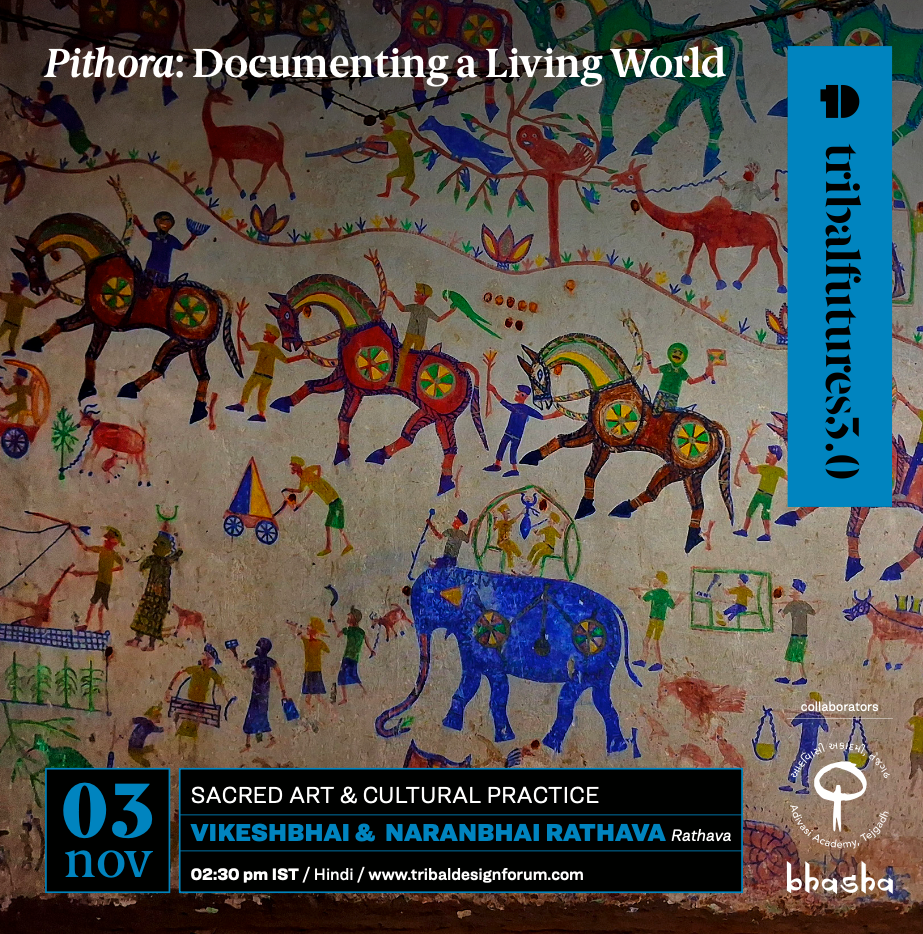
Day 2 of TribalFutures 3.0 explores Baba Pithora, revealing the Rathwa community's living Indigenous knowledge, sacred art, ecological beliefs and identity.
Rathwa knowledge practitioners Narayan Rathwa and Vikesh Rathwa explore how Baba Pithora goes beyond traditional painting to embody living faith, ancestral memory, ecological relationships and community identity.
November 4, 2026 | The Tribal Times
What happens when an Indigenous painting is admired for its colours and patterns, but the community, beliefs and knowledge behind it are overlooked?
This question emerged during Day 2 of TribalFutures 3.0, an international festival of Indigenous knowledge, art and design organised by the Tribal Design Forum (TDF).
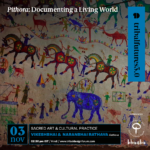
The session featured Narayan Rathwa and Vikesh Rathwa, associated with the Adivasi Academy in Tejgadh, Gujarat, who introduced audiences to Baba Pithora, a sacred painting tradition practised among the Rathwa and other Indigenous communities of western India.
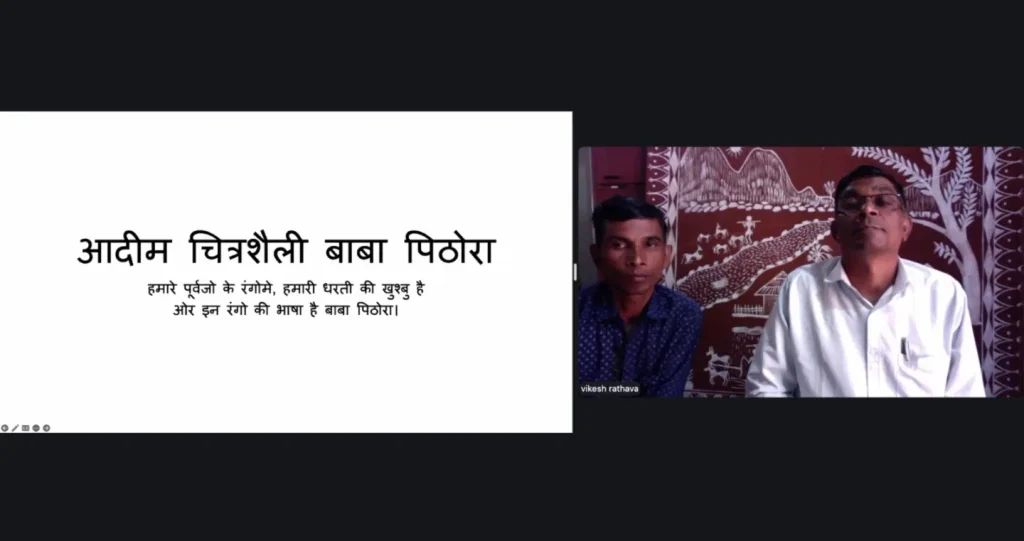
Their presentation revealed that Baba Pithora is far more than a decorative art form. It is a living Indigenous knowledge system encompassing spirituality, ecological relationships, oral histories, ancestral memory and collective community practices.
Beyond Painting: Baba Pithora as a Living Faith
Opening their presentation, the speakers described Baba Pithora as the language of ancestral colours carrying the fragrance of the earth.
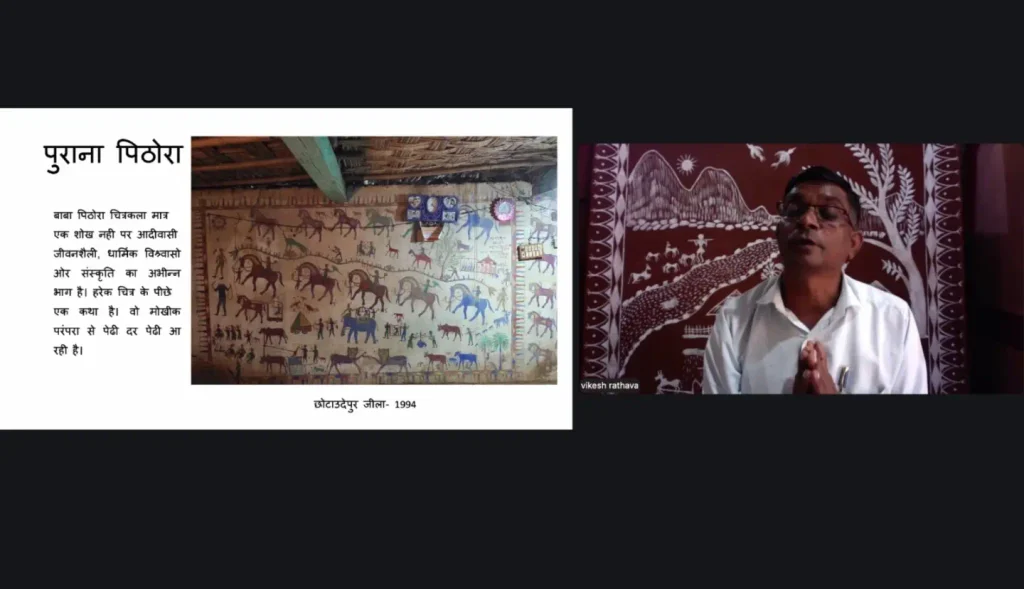
They explained that Pithora paintings are traditionally created within homes as part of elaborate religious ceremonies, often associated with vows, family wellbeing, agriculture, livestock and gratitude.
The process involves multiple community members, including the Badwa, a ritual specialist; the Lakhara, a traditional painter; and the Ghardhani, the householder organising the ceremony.
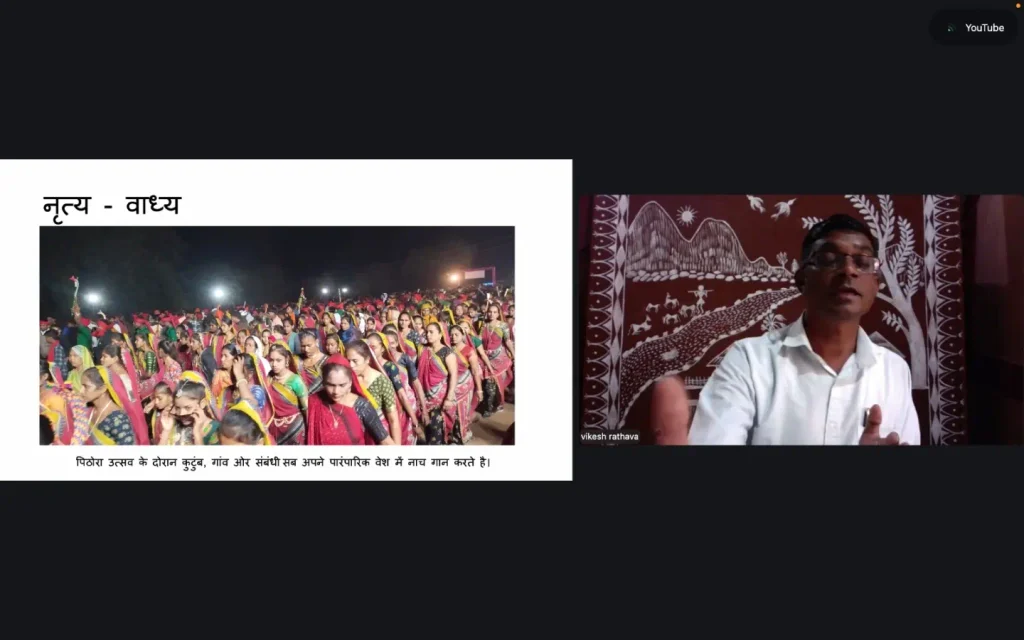
From preparing walls using locally available materials to creating sacred figures and performing rituals, the practice brings together painting, storytelling, music, agriculture and community participation.
The speakers explained how representations of animals, birds, forests, the sun, moon, ancestors and deities express relationships between human life and the natural world.
Each figure carries meanings rooted in the community’s beliefs and oral traditions.
Who Owns Indigenous Art and Knowledge?
The discussion, moderated by Shyam Murmu and Sejal Rathwa, moved beyond artistic traditions to questions of documentation, representation and cultural responsibility.
Sejal asked how knowledge transmitted orally across generations could be documented without losing its cultural meaning.
The speakers discussed their work documenting Baba Pithora in a book of approximately 360 pages, emphasising that the knowledge belongs to the community and that they served as a medium for bringing it into written form.
Another important question concerned how researchers, designers and visitors should approach sacred Indigenous imagery.
The speakers stressed that Baba Pithora must be understood in relation to its religious and community significance, rather than treated merely as an artistic motif that can be reproduced anywhere.
When Indigenous Art Is Separated from Indigenous People
Reflecting on the presentation, Shyam Murmu challenged the superficial understanding of Indigenous communities as simply nature worshippers.
He observed that Baba Pithora demonstrates how such relationships are sustained through collective practices, beliefs and responsibilities.
He also raised a larger concern about how Indigenous art is represented:
“When we look at art, we say that art is an integral part of human life. But when Indigenous art is viewed, people often retain the art and remove the Indigenous people from it.”
The observation captured a central concern of the session: appreciation of Indigenous creativity should not come at the cost of erasing Indigenous identity, knowledge and cultural authority.
Celebrating Indigenous Knowledge at TribalFutures 3.0
Organised by the Tribal Design Forum, TribalFutures 3.0 brings together Indigenous designers, artists, researchers and knowledge practitioners from around the world for a month-long exchange of ideas.
The Day 2 discussion demonstrated why Indigenous knowledge cannot always be separated into conventional categories such as art, religion, ecology or design.
For the Rathwa community, Baba Pithora exists through the relationships between people, ancestors, spiritual beings and the environment.
The session offered a reminder that to understand Indigenous art, one must also recognise the people, knowledge systems and living traditions that give it meaning.
About TribalFutures 3.0: The third edition of TribalFutures is being held online throughout November 2026, featuring conversations on Indigenous knowledge, art, design, language, ecology, architecture, education and technology.
Related Posts
Stay Informed With the Latest & Most Important News
Previous Post
Next Post


Advertisement